Water security key to economic stability, reflects Rand Water chairperson


Sustainable water management is not just an environmental concern, but an economic, developmental and moral imperative, with water security inseparable from climate resilience, economic stability and social dignity.
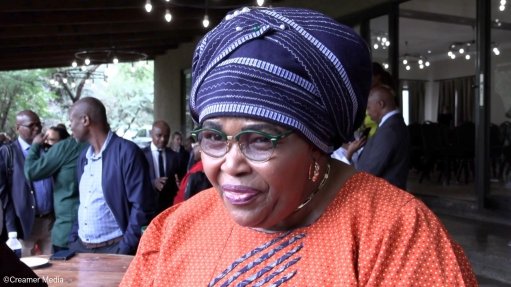
In an opinion piece, Rand Water and the Association of Water and Sanitation Institutions of South Africa (Awsisa) chairperson Ramateu Monyokolo pointed out that climate change was intensifying droughts, floods, infrastructure stress and water scarcity.
This demands that both South Africa and the continent accelerate the transition toward resilient, diversified and well-governed water systems, as water security emerges as a national priority, a continental development imperative and a global climate-resilience agenda.
Monyokolo’s comments followed a convergence of themes emerging from the G20 Leaders’ Summit; the Southern African Development Community (SADC) Groundwater Conference; the National Water and Sanitation Indaba; the African Union-Africa Water Investment Programme (AU-AIP) G20 Water Investment Summit; and the Awsisa Africa and Global South Water & Sanitation Dialogue 2025.
All of these gatherings, held throughout 2025, underscored the urgency of bold, decisive and collaborative action to secure water resources and fortify climate resilience, and signalled growing global consensus on water security and climate action, he said.
The consistent and urgent messages that emerged during the events included that climate change is a threat multiplier, which is intensifying scarcity and widening inequality; that groundwater, managed aquifer recharge, sanitation transformation and water reuse must be central to national water portfolios; and that strong institutions and capable municipalities are essential for resilience.
Further key points highlighted include that blended finance and major investment are required to modernise ageing systems; regional cooperation, particularly across shared SADC aquifers, is critical; inclusion, social justice and human rights must guide all reforms; and research, technology and innovation are indispensable for climate-adaptive solutions.
The National Water and Sanitation Indaba, highlighting that South Africa’s water crisis is fundamentally a governance and infrastructure challenge exacerbated by climate variability, called for decisive structural reforms, including the establishment of the National Water Resource Infrastructure Agency, the strengthening of catchment management agencies, professionalisation of municipal water utilities and the modernisation of sanitation systems.
Crucially, the Indaba stressed that research, innovation and inclusive participation must underpin all future water planning.
At continental level, the AU-AIP G20 Water Investment Summit, which positioned water as a strategic climate-adaptation asset, highlighted Africa’s significant water investment gap and secured a climate-resilient project pipeline of about $10-billion to $12-billion a year.
The Awsisa Africa and Global South Water & Sanitation Dialogue focused on equity and community resilience, emphasising that informal settlements, rural communities, women and youth are disproportionately affected by climate-induced water insecurity.
The dialogue championed localised innovation, utility reform, cross-border cooperation and inclusive partnerships to ensure that climate-resilient services reach all households and institutions.
“Taken together, these events reinforce a powerful truth: water security is the single greatest determinant of economic stability, social cohesion and climate resilience in developing nations,” Monyokolo said.
Drawing inspiration from the G20 Leaders’ Declaration and the deliberations at the SADC Groundwater Conference, Awsisa emphasises that strategic, coordinated efforts are essential to addressing the complex water challenges confronting South Africa and the broader region.
“The G20 Leaders’ Declaration reflects not only collective ambition but also the imprint of South Africa’s vision: a world where climate action, water security and sustainable development are pursued with justice, equity and solidarity.
“By placing unprecedented emphasis on water, the Declaration underscores its role in climate-smart agriculture, resilient infrastructure, adaptation financing and the protection of freshwater and groundwater resources,” he highlighted.
However, declarations alone are not sufficient.
Translating commitments into tangible results required scaling up managed aquifer recharge, protecting groundwater from pollution and over-extraction, restoring wetlands and catchments, strengthening municipal capacity and utility reform, modernising monitoring and governance, investing in climate-resilient infrastructure and ensuring equitable service delivery, particularly for vulnerable communities, he said.
“South Africa occupies a unique convergence point: G20 President, continental convenor and domestic water custodian. This affords a once-in-a-generation opportunity to translate global momentum into local delivery and regional transformation.”
South Africa’s advocacy that climate change is fundamentally a water crisis has broadened global understanding of water as central to food systems, energy transitions and human security, and the country’s own lived experience – from the Cape Town Day Zero crisis to the KwaZulu-Natal floods – makes it a credible advocate for water-centric climate solutions.
“If we act with resolve, unity and vision, by turning commitments into practice, South Africa can secure its own water future while helping to chart a water-secure, climate-resilient future for the continent. Water must become more than a sector. It must be the foundation of a just, resilient and inclusive Africa,” Monyokolo concluded.
Article Enquiry
Email Article
Save Article
Feedback
To advertise email advertising@creamermedia.co.za or click here

Projects
Latest Multimedia

Latest News

Showroom

Sulzer South Africa, established in 1922, partners with critical industries like power, oil & gas, water, mining, and chemicals to boost...
VISIT SHOWROOM
Your global lifecycle technology & service partner for materials & minerals processing equipment for coal, iron ore, copper, manganese & other...
VISIT SHOWROOM

Announcements
What's On
Subscribe to improve your user experience...
Option 1 (equivalent of R125 a month):
Receive a weekly copy of Creamer Media's Engineering News & Mining Weekly magazine
(print copy for those in South Africa and e-magazine for those outside of South Africa)
Receive daily email newsletters
Access to full search results
Access archive of magazine back copies
Access to Projects in Progress
Access to ONE Research Report of your choice in PDF format
Option 2 (equivalent of R375 a month):
All benefits from Option 1
PLUS
Access to Creamer Media's Research Channel Africa for ALL Research Reports, in PDF format, on various industrial and mining sectors
including Electricity; Water; Energy Transition; Hydrogen; Roads, Rail and Ports; Coal; Gold; Platinum; Battery Metals; etc.
Already a subscriber?
Forgotten your password?
Receive weekly copy of Creamer Media's Engineering News & Mining Weekly magazine (print copy for those in South Africa and e-magazine for those outside of South Africa)
➕
Recieve daily email newsletters
➕
Access to full search results
➕
Access archive of magazine back copies
➕
Access to Projects in Progress
➕
Access to ONE Research Report of your choice in PDF format
RESEARCH CHANNEL AFRICA
R4500 (equivalent of R375 a month)
SUBSCRIBEAll benefits from Option 1
➕
Access to Creamer Media's Research Channel Africa for ALL Research Reports on various industrial and mining sectors, in PDF format, including on:
Electricity
➕
Water
➕
Energy Transition
➕
Hydrogen
➕
Roads, Rail and Ports
➕
Coal
➕
Gold
➕
Platinum
➕
Battery Metals
➕
etc.
Receive all benefits from Option 1 or Option 2 delivered to numerous people at your company
➕
Multiple User names and Passwords for simultaneous log-ins
➕
Intranet integration access to all in your organisation